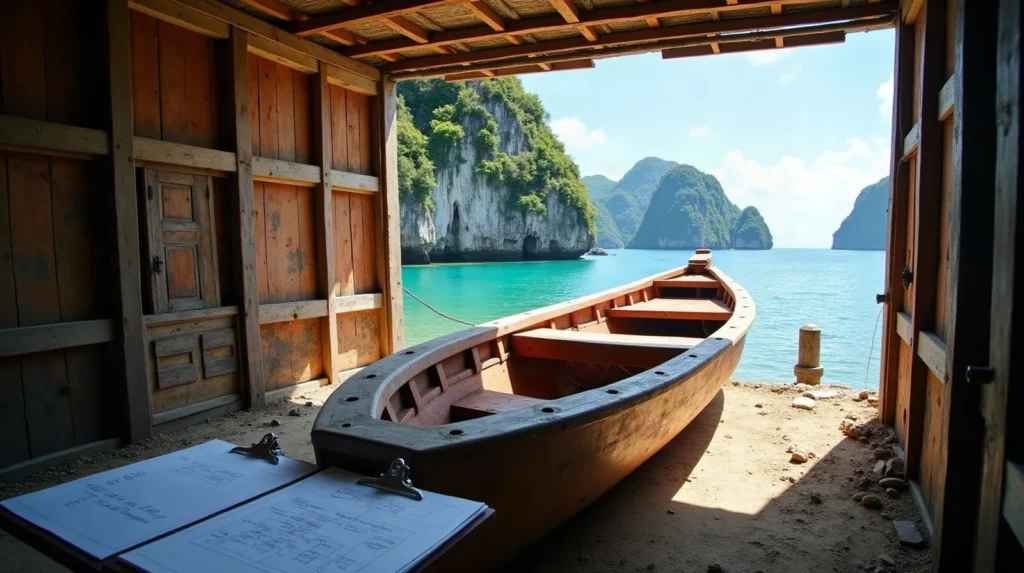
The top mistakes when specifying a new dive tender are consistent enough to list from memory: sizing the boat for the brochure group instead of the real manifest, quoting payload in seats instead of kilograms, powering for top speed instead of loaded cruise, ignoring the service network behind the engine badge, treating the ladder and gate as accessories, forgetting the boat must also be lifted, moored, and fuelled, and signing a build contract against a specification that was never actually written down. Every one of these is avoidable at the paperwork stage for the cost of an afternoon; every one is expensive to fix in metal or laminate.
Mistake one: sizing to hopes, not manifests
Owners specify for the fullest imaginable trip; operations run on the median one. The fix is mechanical: pull two seasons of real passenger counts and size for the load you carry most weeks, with a plan (second boat, double runs) for the peaks. The class-by-class arithmetic in the 8–12 diver size comparison exists for exactly this decision. An oversized tender burns its excess in fuel every single day; an undersized one caps your revenue.
Mistake two: payload in seats, not kilograms
Twelve seats does not mean twelve divers: at roughly 100 kg per diver with kit, plus crew, water, spares, and fuel, a “twelve-seat” boat may be overloaded before it leaves the jetty. Specify maximum operating displacement as a number and demand the design carries it with proper freeboard and self-draining decks. This is the foundation topic of the full specification guide — and the mistake that quietly causes most of the wet, slow, tender rides in the region.
Mistakes three and four: power and engine ecosystem
Powering for a light-boat top speed produces engines that must run near their limit every loaded trip — premature wear, no reserve against Dampier Strait afternoons. Specify cruise at 70–80 percent throttle at full displacement instead. Then check the ecosystem: an engine brand without parts and mechanics in Sorong is a liability whatever its specification, as argued in the outboard selection article. Redundancy deserves an explicit decision too, not a default — see the twin-versus-single analysis before assuming either answer.
Mistakes five and six: deck hardware and shore interfaces
Gates, ladders, and racks decide the boat’s daily experience, yet briefs routinely leave them to the yard’s habit. A ladder that stops at the surface, a gate the helm cannot see, racks that free cylinders in chop — each is a permanent daily tax. Specify them deliberately using the deck layout guide. Equally neglected: the shore interfaces. Davit weight limits, jetty draft, mooring exposure, fuel logistics — a boat is a node in a system, and the system constraints belong in the specification sheet.
Mistake seven: building without a signed specification
The costliest mistake is procedural. A build that starts from a conversation and a deposit will drift — on scope, on weight, on schedule, on price — with no document to arbitrate. The professional sequence is brief, preliminary design, written specification, then contract referencing that specification, then staged payments against inspected milestones — the framework detailed in the staged payments and contracts article. This is the discipline we enforce on every commission we supervise through the Raja Ampat commissioning process, and it is the difference between a delivery date and a hope.
Mistake eight: ignoring the crew who will run the boat
Specifications written entirely at the owner’s desk miss the knowledge of the people who will drive, fuel, and fix the boat daily. Crews know which jetty cleat is missing, which mooring drags in a west squall, which engine the Sorong mechanic refuses to touch, and how guests actually move when seas build. Bring the senior skipper into the brief review and the deck mock-up; the corrections are always inexpensive on paper. The symmetrical error also exists — specifying purely from crew habit and replicating an old boat’s flaws in new metal. The discipline is to collect crew knowledge as evidence, then test it against the operating numbers before it becomes a line item.
Mistake nine: skipping the paper trail that protects the budget
Owners in a hurry treat documentation as friction: no signed specification annex, change requests agreed by message and memory, no witnessed weighings, no formal trials report. Each shortcut transfers risk from the yard to the owner silently. The build that goes well anyway hides the cost; the build that goes wrong reveals it all at once, in a dispute with no reference documents in a jurisdiction far from home. The full protective sequence — specification annex, staged payments against inspected milestones, written change orders, trials acceptance with retention — costs a few hours of administration spread over months. It is the least technical part of buying a boat and the part that most reliably separates good outcomes from expensive lessons.
Frequently Asked Questions
What is the single most expensive specification mistake to fix later?
Understating payload. It reaches into structure, freeboard, power, and stability at once, and correcting it after build effectively means a different boat. Honest kilograms on day one are the highest-value line in the whole specification.
How do I sanity-check a specification before signing?
Have it reviewed by someone whose income does not depend on the build proceeding — an independent designer or supervisor. The review costs little in USD, and catching one wrong number repays it many times over. Our supervision service performs exactly this review before any yard contract is signed.
Are stock designs safer than custom for a first tender?
Often yes: a proven stock design with documented performance removes whole categories of risk, and modest customisation of deck hardware covers most operators’ needs. Go fully custom when your operating profile genuinely is not served — not for the flag on the bow.
Raja Ampat Boat Builder Desk — a specialist maritime brand under Juara Holding Group. Construction contracts issued by PT Komodo Galangan Nusantara. WhatsApp +62 811-3941-4563 · bd@juaraholding.com