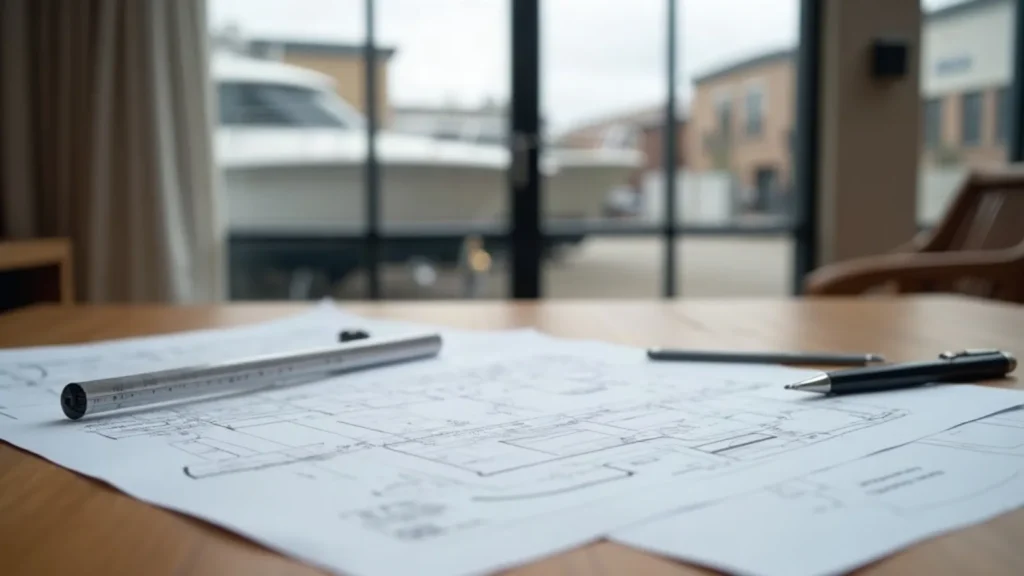
Most new-build disputes trace back to five omissions: an ambiguous specification, undefined milestones, no variation procedure, no stated delivery condition, and no agreed handover package. Every one is preventable with questions asked before signature. Here is the list we would want an owner to put to us — or to anyone else.
About the specification
- Is the specification a numbered annex to the contract? If it is a brochure or an email thread, it is not enforceable.
- Are capacities stated as numbers? Fuel, water, cooling capacity per space, generator ratings, compressor output. “Adequate” is not a specification.
- What exactly is owner-supplied? Electronics, tender, dive equipment, soft furnishings, safety gear. Every gap here becomes a dispute later.
- Which equipment is named and which is “or equivalent”? If substitution is allowed, who decides equivalence, and can you refuse?
- Are finish standards defined? Named materials and finish schedules, not adjectives.
Framework we use: technical specifications.
About money and milestones
- What physical condition defines each milestone? “Hull complete” must mean something a third party can verify.
- Who inspects before payment is released, and what happens if the inspection fails?
- How are variations priced? Agree the method — rates, mark-up, approval process — before you need it, because at that point you have no leverage.
- What happens to the vessel if the builder becomes insolvent? Title to work in progress and to owner-supplied equipment should be addressed explicitly.
- Are there liquidated damages for late delivery, and what excuses delay?
Payment structures: pricing and investment.
About the schedule
- What is the delivery date, and what is the assumed start? A duration without a trigger date is not a commitment.
- Which long-lead items are ordered, and when? Engines and generators drive the critical path — see Sorong logistics.
- What other work is in the yard, and how is your project prioritised against it?
- How does weather affect the programme, and is that risk allocated in the contract?
About certification
- What certification route is assumed, and who pays for plan approval and survey attendance? See working with class and BKI.
- Who is responsible if the vessel fails a survey? Rework cost and schedule impact should be allocated, not left open.
- What documentation is delivered? As-built drawings, stability information, equipment certificates, tank calibration, commissioning records — see permits and certificates.
About delivery and afterwards
- What is the defined delivery condition? Sea trials passed against a written protocol, tanks at a stated level, spares aboard, documentation complete, systems commissioned and demonstrated.
- What warranty applies, for how long, and how is warranty work performed on a vessel operating in Raja Ampat? A twelve-month warranty is worth little if the builder cannot reach the boat.
- What training and handover is included? Captain and engineer attending commissioning is the best training available, and it should be written in.
About the people
- Who is the single named point of contact for the duration of the build, and what happens if that person leaves?
- Can you visit a vessel the builder completed three or more years ago, and speak to its owner? Recent work shows craftsmanship; older work shows how it ages and whether problems were honoured.
- Who supervises on the owner’s behalf? An independent inspection at each milestone is inexpensive relative to the contract value and changes the dynamic of the whole project.
Three answers that should concern you
“We can start next month.” On a serious vessel, that means design has been skipped. Design compression is where problems are manufactured — see the build timeline.
“Do not worry about the specification, we build these all the time.” Experience is valuable; it is not a substitute for a document you can enforce.
“That is included, do not worry.” If it is not written down, it is not included. Ask for it in the annex.
What good looks like
A sound contract is boring to read and precise about disagreement. It states what is being built, in what condition it will be delivered, when, for how much, what happens when something changes, and what documents come with the boat. Nobody enjoys negotiating it, and every owner who has one is grateful in month fourteen.
Process overview: the commissioning guide. Vessel pages: liveaboards and dive boats. To review a draft scope before you sign anything, contact +62 811 3941 4563 or bd@juaraholding.com.
Frequently Asked Questions
What questions should I ask before signing a new-build contract for a Raja Ampat dive boat?
Confirm the specification is a numbered contract annex with stated capacities and a clear owner-supply list; that each milestone has a verifiable physical definition with an inspection before payment; that variations have an agreed pricing method; that the delivery condition, warranty and handover documentation are defined; and that the certification route and responsibility for survey failure are allocated.
What is the most common cause of new-build disputes?
An ambiguous specification. Every ambiguity becomes a variation order, and variation orders are priced without competitive pressure because the builder is already constructing your boat.
What answers from a builder should raise concern?
An offer to start construction next month on a serious vessel, which usually means design has been skipped; reassurance that the specification does not matter because they build these all the time; and anything described as included without appearing in the written annex.
What should the delivery condition include?
Sea trials passed against a written protocol, tanks at a stated level, the agreed spares package aboard, complete documentation including as-built drawings and commissioning records, and all systems commissioned and demonstrated to the owner’s crew.