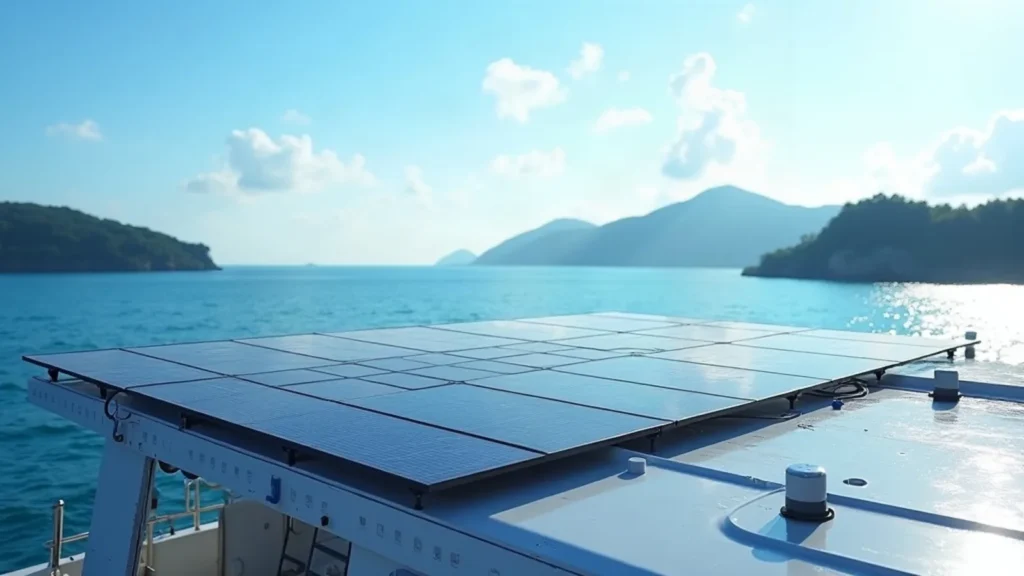
Solar and batteries can meaningfully cut generator hours on a Raja Ampat liveaboard, but they will not eliminate them on an air-conditioned vessel. The honest framing is: solar offsets daytime and evening hotel load, batteries move load away from the generator’s least efficient hours, and together they reduce fuel, noise and maintenance. Anyone promising a generator-free dive liveaboard in the tropics is selling something that does not exist yet.
Start with the load, not the panels
The mistake is choosing an array size first. The correct sequence is to build the electrical load table — air conditioning, compressors, watermaker, refrigeration, galley, lighting, pumps, navigation, camera charging — with realistic hours per day for each, then ask which parts of that load solar can plausibly serve.
What solar serves well: refrigeration, lighting, electronics, camera charging, pumps, and daytime domestic load. What it struggles with: air conditioning across a full night for a full guest complement, and compressors. That distinction sets expectations correctly. See sizing fuel, water and generators.
What the equator actually gives you
Raja Ampat’s position is genuinely favourable — consistent day length and high sun angle year-round. But three factors reduce real output well below panel ratings:
- Heat. Photovoltaic output falls as cell temperature rises, and panels on a tropical deck run hot. Mounting with an air gap beneath helps materially.
- Shading. Masts, rigging, radar arches, awnings and tender davits all shade panels at some point in the day, and partial shading disproportionately reduces output unless the array is configured for it.
- Salt and soiling. Salt film cuts output. Panels need to be reachable for cleaning, which is a layout decision.
Plan on real-world daily yield noticeably below nameplate, and size the system with that assumption rather than a brochure figure.
Where panels can actually go
Available area is the binding constraint on almost every liveaboard, and it competes directly with the sun deck — which is a revenue space guests value. Practical locations:
| Location | Assessment |
|---|---|
| Wheelhouse and hardtop roofs | Best compromise: unshaded, out of guest space, accessible for cleaning |
| Purpose-built arch or gantry aft | Good area, adds weight high up, can shade the aft deck usefully |
| Sun deck bimini structure | Large area and doubles as shade, but structure and windage must be engineered |
| Sun deck itself | Conflicts directly with guest use; rarely worth it on a charter vessel |
Note the dual benefit in rows two and three: a panel is also a shade structure, and shading the vessel reduces air conditioning load — see HVAC design.
Batteries: weight, chemistry and honesty
Battery banks let you store solar production and run the vessel through the evening without a generator, and let generators run at efficient load rather than lightly loaded for hours — which is where wet stacking and premature wear come from.
The trade-offs are weight and volume. Lithium chemistries offer far better energy density and usable depth of discharge than lead-acid, at higher purchase cost and with real requirements: proper battery management, ventilation, fire protection, isolation from accommodation, and crew who understand the system. In a remote operating area, the availability of replacement cells and technical support is a legitimate selection criterion.
Weight placement matters too. A large bank high in the vessel affects stability; low and central is preferred, which competes with tankage for the best space.
A realistic target
For a mid-size dive liveaboard, a well-designed solar and battery installation can plausibly:
- Carry refrigeration, lighting, electronics and charging through daylight hours without a generator.
- Run the vessel silently at anchor for part of the evening.
- Reduce total generator hours across a season meaningfully, cutting fuel, servicing and noise.
What it will not do is run full air conditioning overnight for twelve cabins. Owners who accept that framing get a system that works; owners who expect otherwise end up disappointed with equipment that is performing exactly as physics allows.
The commercial case
Fuel saving alone often produces a slow payback. The stronger arguments are the ones that do not appear on a fuel bill: silent anchorages improve guest experience and reviews, fewer generator hours mean less servicing and longer machinery life, and a visible, genuine efficiency measure has real value with environmentally conscious guests — provided it is described accurately rather than overstated.
Full framework: technical specifications. Vessel context: liveaboard new-builds and engine and propulsion choices. To size a system against your load table, contact +62 811 3941 4563 or bd@juaraholding.com.
Frequently Asked Questions
Can solar and battery systems reduce generator use on a Raja Ampat liveaboard?
Yes, meaningfully, but not to zero on an air-conditioned vessel. Solar reliably carries refrigeration, lighting, electronics, pumps and charging through daylight, and a battery bank can run the vessel silently at anchor for part of the evening. Full overnight air conditioning for a whole guest complement still needs a generator.
How much output do solar panels really deliver in the tropics?
Noticeably less than nameplate rating. Output falls as cell temperature rises and tropical deck panels run hot, partial shading from masts, arches and davits disproportionately reduces production, and salt film cuts yield further. Size the system on realistic daily yield, mount panels with an air gap and keep them reachable for cleaning.
Where should solar panels be mounted on a liveaboard?
Wheelhouse and hardtop roofs are usually the best compromise — unshaded, clear of guest space and accessible for cleaning. A purpose-built aft arch or a sun deck bimini structure adds area and doubles as shade, which also reduces air conditioning load, but both add weight high up and require engineering.
Are lithium batteries suitable for remote Raja Ampat operations?
They offer far better energy density and usable depth of discharge than lead-acid, but require proper battery management, ventilation, fire protection, isolation from accommodation and crew who understand the system. In a remote area, availability of replacement cells and technical support is a legitimate part of the decision.