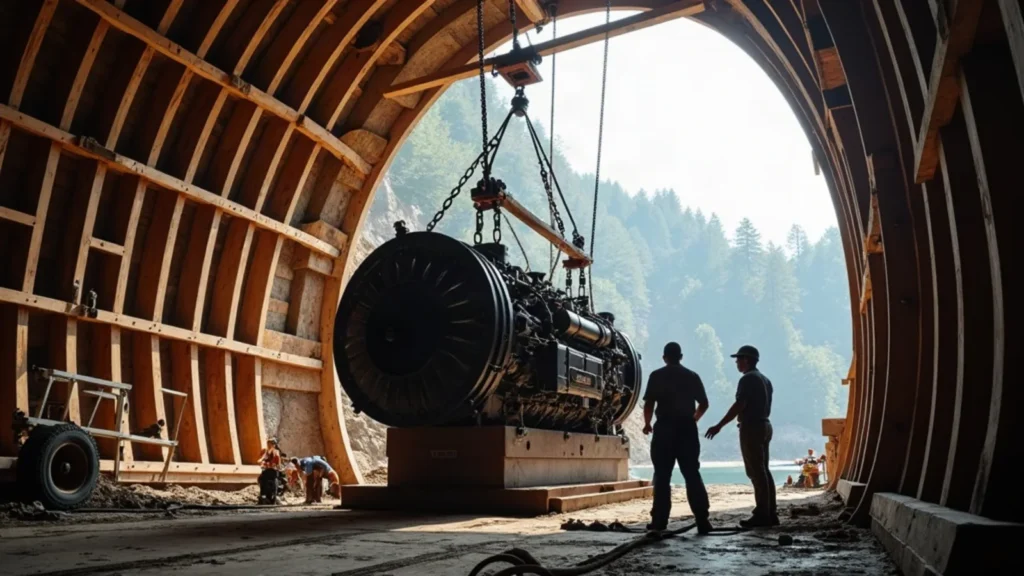
Engine selection for a Raja Ampat liveaboard is decided by three constraints in this order: serviceability from Sorong, fuel burn at the speed you will actually run, and redundancy. Peak horsepower is the least important number on the datasheet. A boat that cannot be repaired locally, or that burns fuel it cannot carry, will not complete a season regardless of how it performs on trials.
Start with resistance, not horsepower
Engine sizing begins with a hull resistance estimate at the intended cruising speed with the boat at full operating displacement — guests, crew, full tanks, tender, dive gear and provisions. Not the trial condition. Then a margin is added for hull fouling, weather, and the current you will meet in the passages.
Most owners over-power. A 30 m displacement liveaboard is not going anywhere quickly no matter what is installed, and the extra power is bought at the cost of fuel, weight, engine-room volume and purchase price. What matters far more is where the engine sits on its load curve at your cruise setting: a diesel running at 60–75% of rated load is efficient and long-lived; one loafing at 30% suffers from poor combustion and higher maintenance.
Find the economical cruise band and design around it
Every hull has a speed range where fuel consumption per nautical mile bottoms out. On a displacement liveaboard that band is often two to three knots below the maximum, and the difference in consumption between the two can be dramatic — enough to change how much fuel the boat must carry, which changes tank size, which changes displacement.
Practical consequence: identify the economical cruise during design, then size tankage from it and instruct crews to run there. Many operators discover this in year three when analysing fuel bills. Designing for it from the start yields a smaller, lighter, less expensive boat that goes further. Tankage arithmetic is covered in sizing fuel, water and generators.
Redundancy: what failure actually costs
| Configuration | Suits | Failure consequence |
|---|---|---|
| Single main engine | Protected-water day boats with towing options | Trip cancelled; tow needed if offshore |
| Twin mains | Any vessel carrying paying guests offshore | Reduced speed, itinerary continues |
| Twin mains + get-home capability | Remote expedition itineraries | Vessel reaches port under own power |
For Raja Ampat expedition work, twin mains are the baseline. The archipelago’s remoteness means a single-engine failure at Wayag is not a delay, it is an incident. Twin installations also allow one engine to be shut down at low-speed transit, keeping the running unit better loaded.
Serviceability from Sorong
This is the criterion that quietly overrides everything else. Ask three questions about any engine before specifying it:
- Who services it in eastern Indonesia? Named workshop, not “the manufacturer has a network”.
- Which parts are stocked, and where? Impellers, filters, injectors, belts, sensors and a starter should be reachable in days, not weeks.
- Can the crew do first-line work? If routine servicing needs proprietary diagnostic equipment, every minor fault becomes an external dependency.
A slightly less efficient engine with real regional support will out-earn a superior unit with none. Logistics context: Sorong new-build coordination.
Engine room design
Specification is not only which engine, but how it is installed. Priorities:
- Access on all sides. Filters, pumps, belts and injectors reachable without dismantling. Maintenance that is awkward gets deferred, and deferred maintenance is what strands boats.
- Ventilation sized for tropical heat. Engine rooms in equatorial conditions run hot, and every degree above design intake temperature costs power and life.
- Noise and vibration isolation. Flexible mounts, proper alignment and lined bulkheads. Guests sleeping above the engine room notice everything.
- Fuel system clarity. Visible primary filters with water separators, accessible drain points, and a transfer arrangement that lets crew move fuel between tanks and polish it.
Fuel quality in remote areas is variable, and a well-designed filtration and polishing arrangement is the single most valuable insurance an expedition vessel can carry.
Propellers, shafts and steering
Propeller selection matters as much as engine choice and is more often neglected. A correctly matched propeller allows the engine to reach rated revolutions at full load; an over-pitched one lugs the engine, raises exhaust temperature and shortens life. Specify a sea-trial propeller check with the ability to adjust pitch afterwards.
Steering deserves attention on any vessel diving in current. Rudder area and shape determine whether the boat holds a line at low speed while divers are being recovered — one of the most common complaints on vessels designed elsewhere. See dive boat new-builds.
Hybrid and electric, honestly
Hybrid arrangements make sense where a vessel spends long periods at low load or at anchor with high hotel demand, allowing generators and mains to be used more efficiently. Fully electric propulsion is currently realistic only for short, predictable day operations with charging infrastructure — see low-noise electric catamarans. For an expedition liveaboard covering hundreds of miles without shore power, conventional diesel with a well-designed electrical system remains the practical answer, with solar reducing generator hours at anchor (solar and battery options).
Full specification framework: technical specifications. To discuss a machinery package, contact +62 811 3941 4563 or bd@juaraholding.com.
Frequently Asked Questions
How do I choose the right engine package for a Raja Ampat dive liveaboard build?
Start from hull resistance at your intended cruise speed at full operating displacement, add margin for fouling, weather and current, then weight the decision toward engines with real service support and stocked parts reachable from Sorong. Twin mains are the baseline for any vessel carrying paying guests on remote itineraries.
Is more horsepower better for a liveaboard?
No. Excess power costs fuel, weight, engine-room volume and purchase price, and leaves the engine loafing at low load where combustion and maintenance both suffer. A diesel running at 60 to 75 percent of rated load at your cruise setting is efficient and long-lived.
What engine room features matter most in the tropics?
Access on all sides for filters, pumps and belts; ventilation sized for equatorial intake temperatures; proper noise and vibration isolation under guest cabins; and a fuel system with visible primary filters, water separators, accessible drains and a transfer or polishing arrangement to handle variable fuel quality.
Are hybrid or electric systems viable for Raja Ampat liveaboards?
Hybrid arrangements help where a vessel spends long periods at low load or at anchor with high hotel demand. Fully electric propulsion is realistic only for short, predictable day operations with charging infrastructure. For expedition itineraries covering hundreds of miles without shore power, conventional diesel with solar to reduce generator hours remains the practical choice.