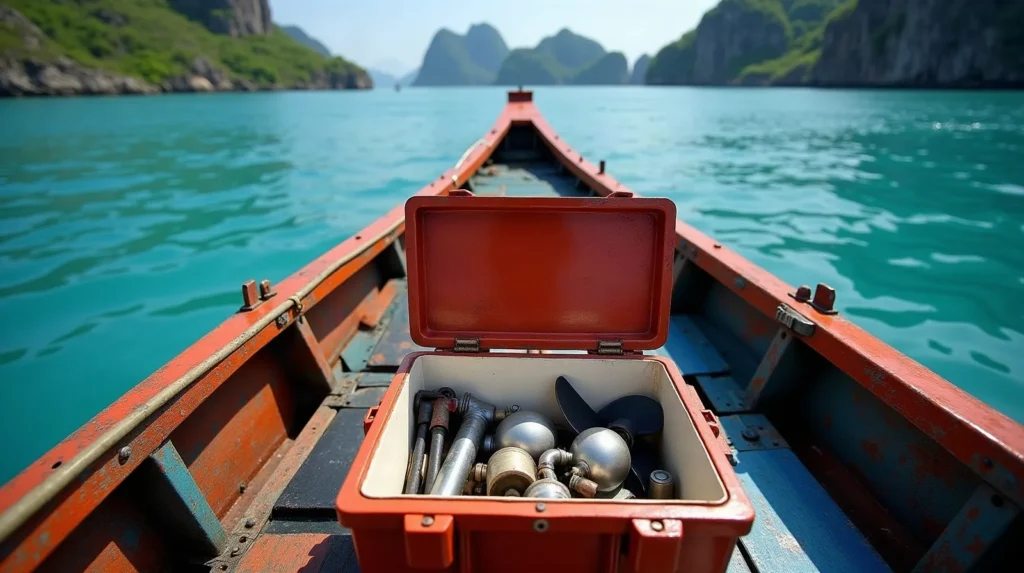
An onboard outboard spares kit for Indonesian operations covers the failures that actually strand boats: fuel contamination, cooling blockages, propeller strikes, and electrical gremlins. The working kit per engine is: two water-separating fuel filter elements and one engine fuel filter, a complete water pump impeller kit, one spare propeller with hardware, spark plugs, a fuel primer bulb and hose section with clamps, fuses and a spare kill-switch lanyard, engine oil and gear oil for one change, anodes, and the hand tools plus workshop manual to fit all of it. Packed in a sealed box, this kit turns most mid-channel failures in Raja Ampat into thirty-minute delays.
Build the kit around real failure statistics
Ask any mechanic between Sorong and Waisai what stops outboards and the list is short: dirty fuel first, by a wide margin; then overheating from impeller wear or plastic-bag intake blockages; then prop damage from reef contact; then chafed wiring and corroded connections. Powerhead failures — the ones no onboard kit fixes — are rare on maintained engines. So the kit is not a parts store; it is a targeted answer to the top four failure modes, aligned with the engine choices made in the outboard selection guide.
Fuel system items: the half of the kit you will use
Fuel from drums and small jetties carries water and sediment as a fact of life. Carry two elements for each water-separating primary filter — because the day you drain water from one, you will foul the next faster — plus the engine’s own inline filter, a spare primer bulb (sun kills them), a metre of correct-bore fuel hose, and clamps. Crews should practice the filter change at the dock until it is a ten-minute job in chop. Twin-engine boats with separated fuel systems, as argued in the redundancy article, rarely lose both engines to one bad drum — but they still carry doubles of everything.
Cooling, props, and electrics
The impeller kit matters because impellers fail from age and sand ingestion, and a cooked engine is a delivered-to-Sorong engine. Include the gaskets and the correct grease. The spare prop should be aluminium even behind a stainless primary — it is the get-home compromise that also absorbs the next reef touch — with its nut, washer, and cotter hardware taped to it. On electrics: fuses of every rating aboard, dielectric grease, a battery terminal brush, crimp connectors with a crimper, and self-amalgamating tape. Half of tropical electrical faults are green corrosion in a connector; the kit should make that a five-minute fix.
Stowage, inspection, and the discipline that keeps kits real
Spares live in a gasketed box, mounted clear of the bilge, inventoried on a laminated card inside the lid. The discipline: whatever is used gets replaced within the week, and the box gets a monthly check on the same sheet as anodes and keel shoe — the maintenance rhythm described in the corrosion protection article. A spares kit that has quietly donated its impeller to another boat is a story that ends with guests drifting. For the boats we deliver, the commissioning handover includes this kit stocked, stowed, and inventoried — part of the operational readiness standard in the commissioning guide.
Training: the kit is only as good as the hands aboard
A spares box without practiced crew is cargo. The training standard worth setting: every skipper and senior deckhand changes a primary fuel filter, swaps an impeller, and changes a propeller at the dock, timed, until each job is routine — then repeats the filter change once at anchor in chop, because that is where it will happen for real. Add fault-finding basics: reading the engine’s warning patterns, checking spark, tracing a dead circuit with the multimeter. An afternoon per quarter maintains the skills. Operators who train this way report the quiet statistic that matters: breakdowns that end trips become breakdowns that delay lunch.
Shore stock: the second ring of the spares system
The onboard kit answers the first hour; the shore stock answers the first week. For a boat or small fleet based around Waisai or Sorong, the shelf should hold: a full service kit per engine per year, a spare propeller of each type in use, a complete set of belts and hoses, gear oil and engine oil in bulk, a starter motor and trim pump for the fleet’s engine family, and the slow-moving items with long delivery times — ordered before they are needed, not after. Review the shelf against the service calendar quarterly. The onboard box, the shore shelf, and the Sorong dealer relationship together form one system; specify all three when the boat is commissioned and the engine family is chosen.
Frequently Asked Questions
How much should a complete outboard spares kit cost in USD?
For one mid-range four-stroke, a properly stocked kit typically runs a few hundred US dollars — a fraction of one cancelled charter day. Twins double most line items. Price it into the build budget rather than treating it as an afterthought.
Should crews carry a spare powerhead or lower unit aboard?
Aboard, no — too heavy, too specialised to fit at sea. Operators running multiple boats on one engine family often hold a spare lower unit ashore in Sorong, which shortens the worst repair from weeks to days. Fleet standardisation is what makes that possible.
What tools belong with the spares kit?
The engine’s plug socket, prop wrench with a scrap-wood prop block, screwdrivers, pliers, a small socket and spanner set covering the engine’s fasteners, a multimeter, and the workshop manual — printed or offline on a phone. Test the toolkit against every spare in the box: if a part cannot be fitted with the tools aboard, the kit is not finished.
Raja Ampat Boat Builder Desk — a specialist maritime brand under Juara Holding Group. Construction contracts issued by PT Komodo Galangan Nusantara. WhatsApp +62 811-3941-4563 · bd@juaraholding.com