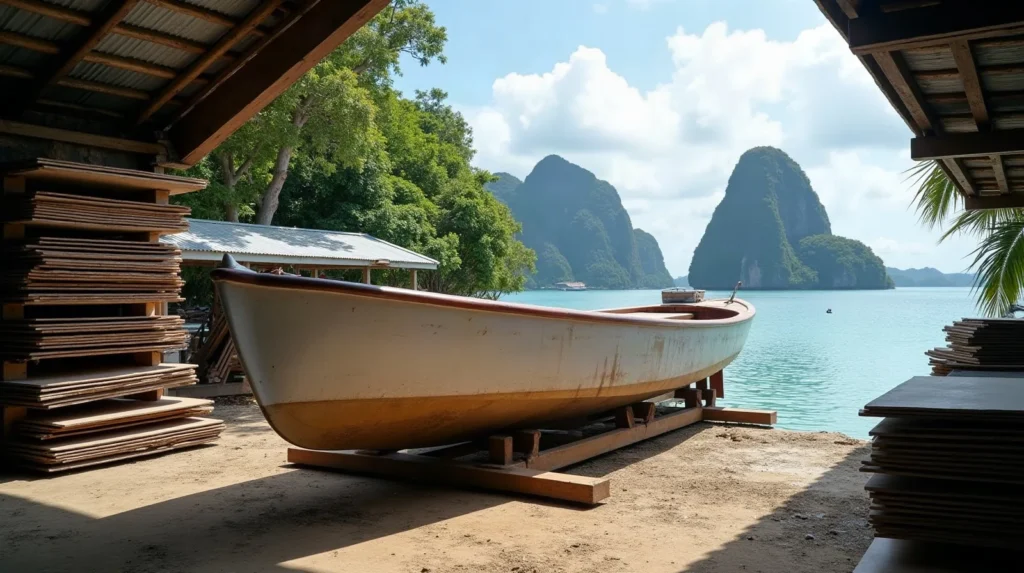
For coral reef operations, hull material choice comes down to three questions: how often will the hull touch something hard, how far are you from repair facilities, and what can your crew maintain. Marine-grade aluminium leads for reef work because it dents instead of cracking, shrugs off gravel beach landings, and can be weld-repaired in Sorong; fiberglass offers lower build cost in Indonesia and easy cosmetic repair but punctures rather than dents on sharp contact; traditional timber remains viable where local carpentry skills are strong. For most Raja Ampat tenders and support craft, aluminium is the default and the other materials must argue their way in.
What reef operations actually do to a hull
The loading profile around reefs is not open-ocean slamming; it is repeated low-speed contact. Coral heads brush the keel in shallow lagoon passes, anchors and chains knock the bow, beach landings grind sand and coral rubble into the forefoot, and jetties in remote villages present bolt heads and broken edges. Over a season this produces hundreds of small impacts. Material choice determines whether those impacts accumulate as cosmetic scuffs, as gelcoat chips that let water into laminate, or as dents that never leak.
Aluminium: the reef workhorse case
5083-series aluminium plate deforms rather than fractures, so the typical coral or jetty strike leaves a dent that is monitored, not repaired. A 5–6 mm bottom on a 10 m tender tolerates deliberate beach landings for years. Repairs are welded — a capability that exists in Sorong — and inspection is visual, with no hidden delamination. The costs: higher material price in USD than fiberglass, mandatory attention to galvanic corrosion around fittings and outboards, and a harder, noisier ride unless the designer works the deadrise properly. Both caveats have engineering answers, covered in our aluminium corrosion protection guide and the deadrise and comfort article.
Fiberglass: cost and comfort, with discipline
FRP builds are widely available from Indonesian yards, price attractively, and produce quiet, easily-shaped hulls with fine cosmetic finish. For resort day boats that live on moorings and rarely touch bottom, fiberglass serves well. The reef caveat is puncture behaviour: a sharp strike can crack through gelcoat and laminate, and a poor repair traps water in the core. If you choose FRP for reef country, specify solid laminate below the waterline (no core), an external keel shoe, and a build-stage inspection regime — the trade-offs are laid out in our aluminium versus fiberglass comparison.
Timber: the traditional option, honestly framed
Indonesian hardwood construction remains real and serviceable, especially where operators want local repairability and traditional aesthetics. Modern epoxy-sheathed timber resists worm and rot far better than oiled traditional builds. The limits: weight, maintenance hours, and the shrinking pool of yards doing structural timber to standard. For working tenders that must turn around fast every day, timber is now the exception we specify only when the owner’s operation is built around maintaining it.
Matching material to your operation
Beach-landing homestay operations, survey craft, and workboats point hard to aluminium. Mooring-based resort boats with careful crews can take fiberglass and bank the savings. Mixed fleets often standardise on aluminium anyway to share repair skills and spares. When we run a commission through the Raja Ampat commissioning process, material is fixed early because it drives yard selection — aluminium, FRP, and timber builds come from different partner yards with different strengths.
Inspection and repair logistics by material
Material choice is also a decision about who can look after the boat and where. Aluminium inspection is visual and immediate — dents and pitting show — and structural repair means a certified welder with argon supply, available in Sorong with notice. Fiberglass inspection needs a practiced eye and sometimes moisture metering to find delamination under gelcoat; repair materials travel well but cure quality depends on weather and skill. Timber wants a shipwright’s survey annually and local hardwood supply for repairs, which West Papua has, though seasoned stock takes arranging. Whichever material you choose, write its inspection calendar into the operating plan at handover — the hulls that fail early in this region fail from unlooked-at problems, not exotic ones.
Weight, speed, and fuel: the material ledger
For the same strength, marine aluminium structure typically comes out lighter than solid-laminate fiberglass built to remote-area robustness, and far lighter than traditional hardwood. On a 10 m tender the difference between an aluminium and a conservative timber build can approach a tonne — which is payload, fuel burn, and beach-landing draft all moving the wrong way. Lighter hulls also plane earlier, extending the efficient speed range on the long runs described across our logistics coverage. Material is therefore not only a durability decision but an economics decision that repeats every operating day of the boat’s life.
Frequently Asked Questions
What aluminium grade should a reef tender use?
Marine 5083 (or 5086) plate for hull structure, with 6 mm bottoms common on 8–12 m working tenders and 4–5 mm on lighter craft. Insist on mill certificates; unmarked plate of unknown alloy is a false economy.
Is fiberglass ever the right choice for Raja Ampat?
Yes — for boats that live on moorings, load at jetties, and are handled by careful crews, solid-laminate FRP with a protected keel performs well and builds for less in USD. It is the wrong choice for routine beach landings and lagoon-edge work.
How do I protect any hull material in daily reef work?
Specify a sacrificial keel shoe, train crews on approach depths, and schedule regular bottom inspections. Material choice sets the damage mode, but operating discipline sets the damage rate; see our keel protection article for the hardware side.
Raja Ampat Boat Builder Desk — a specialist maritime brand under Juara Holding Group. Construction contracts issued by PT Komodo Galangan Nusantara. WhatsApp +62 811-3941-4563 · bd@juaraholding.com
Whatever the laminate or alloy, the first thing a reef touches is the keel — see sacrificial keels and keel protection for reef boats.